Choosing a Steak
Fat Content:
More marbling = more tender, juicy and easier to chew
More fat = more flavor of meat and
Cuts of Steak:
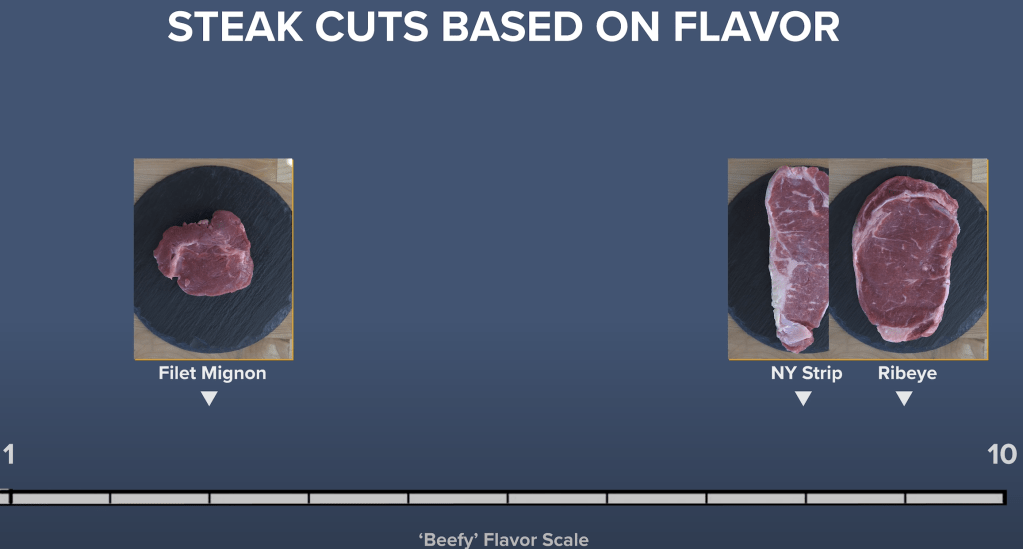
Salting a Steak When should steak be salted?
Salt enhances the flavor. And this applies to steak as well.
When you salt a steak, the salt will slowly diffuse into the meat.
If you only salt the steak immediately after cooking, then you will only have a salty crust, but the salt does not permeate throughout the steak and it won’t have time to diffuse into the meat.
Salt also affects tenderness:
Salt also initiates osmosis which draws water out of the steak. Because of this, many people believe salt dries and toughens food. but with time, salt will dissolve protein strands into a gel, allowing them to absorb and retain water better as they cook. Water is moisture: its presence makes meat tender and juicy.
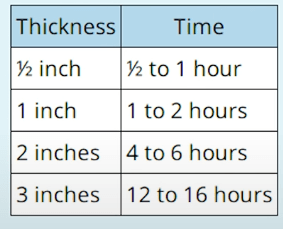
How long does to salt a steak for?
Meat should be wet/dry brine inside a refrigerator. Duration depends on the thickness.
My Salt Conclusion:
1. Salt your steak (at some point)
2. If you have the time, salting in advance will internally season the meat through diffusion and reduce moisture loss, leading to evenly seasoned and juicier steak.
3. Use 1.4% salt by weight of the meat.
4. Salt 1 to 2 hours in advance for a 1 inch steak.
Cooking a Steak:
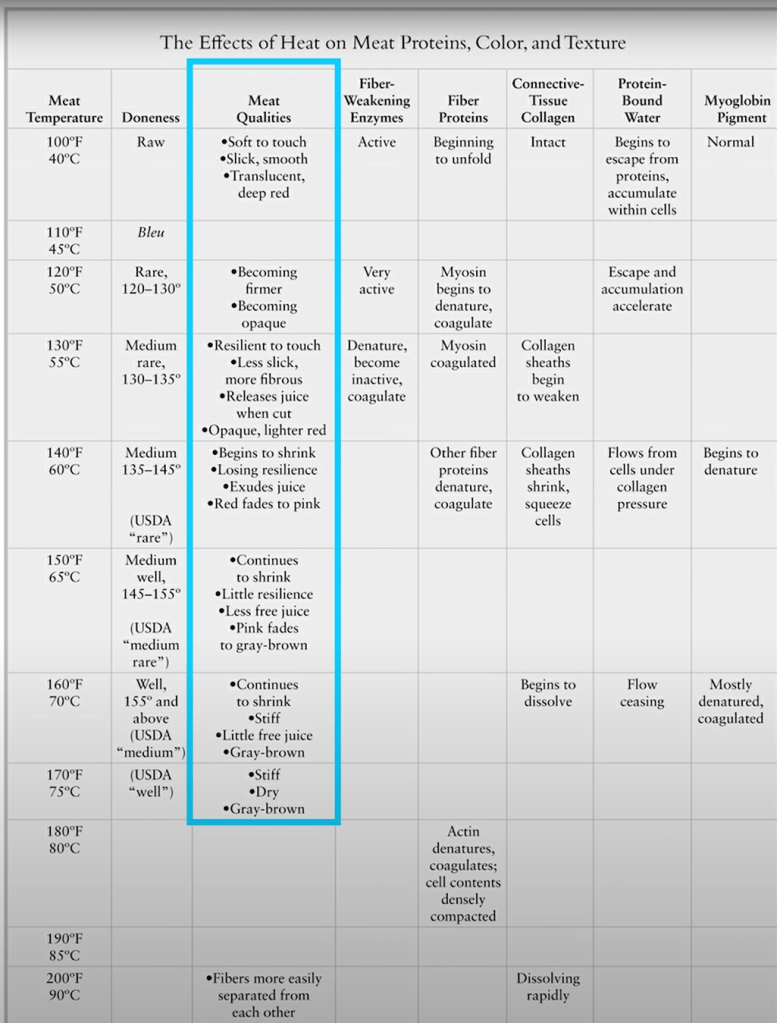
Because rare steak results in the least amount of moisture loss, does it mean that it has the best texture and flavor? No, I would argue that it has a worse texture and worse flavor. The experience of eating a steak is more about the meat’s protein structure, which affects flavour and texture more.
A rare steak (cooked to internal 50C) will be firm but have unrendered marble fat as well as unbroken collagen sheets.
A medium rare steak (cooked to internal 55C) will have its fat rendered and also its collaged sheets weakened. Resulting in more beef flavor, texture, and juiciness.
How to Get a Sear:
1. Exterior temperature of the steak must rise to 100C
2. The surface moisture must completely evaporate from the steak
3. The surface of the steak must rise above 150C (for browning)
4. Pan should be 230 C Fahrenheit for steps 1-2 to happen quickly.
Resting a steak:
Rest the fucker! let the muscle fibers cool down so that they are able to hold more moisture! (5 mins)
Cutting a Steak:
Classic steaks like the NY strip, Filet, and Ribeye are already cut across the grain so it is not necessary, though you could cut diagonally to slightly short them again.
Slice across the grain for whole muscle cuts of meat like tri-tip, flank, and skirt.
 Tau11 - My Journey of Lifelong Learning
Leave a comment